miércoles, 24 de marzo de 2010

Historical Analysis


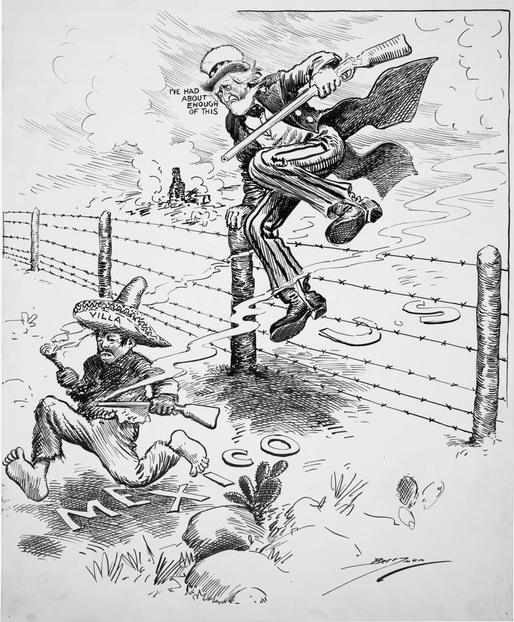
Origin: democraticunderground.com From observing the cartoon I can see that it was made by Americans. It was drawn in 1915.
Purpose: Expressing the American's feeling towards the Mexican rebels who had raided American cities, especially Pancho Villa.
Value: Gives the Mexicans a view of how upset Americans were because of these invasions. Good source because it was made in the time that the events happened.
Limitations: Cartoon does not explain why the Americans are mad. It does not take into account the Mexican's point of view. It is also a cartoon, so it may be exaggerated or not taken seriously.

domingo, 21 de marzo de 2010

Mathematics

Fractals


This tree is a perfect example for a fractal because as you zoom into the branches, you still see the same pattern. In fractals when you zoom in and outm the object should still look the same, and this is the case with this tree. You still see the same shape again and again.

http://www.enchanter.net/florida/day04/fractal.jpg


This video shows nature and all its beauty. It demonstrates what a wonderful world we live in, but it does not mention how fractals have created this world, even though there are plenty of them in the video. Like the mountains, the flowers, and the trees.
http://www.youtube.com/watch?v=8jP8CC2rKj4

viernes, 12 de marzo de 2010

Unethical Animal Testing!


Why is it done?

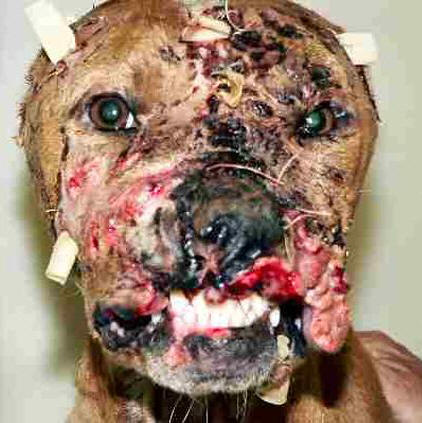
Many shampoos and other personal-care products undergo safety testing before they're made available to consumers. This includes exposing animals to the product to see whether they develop skin irritations or get sick. Animals are often intentionally given diseases to see whether a new drug will have an effect on the disease, and whether the drug has any serious side effects.


Why is it unethical?

Test animals may develop tumors or other nasty conditions, and are often killed intentionally at some point in the test, so scientists can examine the animals' inner damage. Animals do not choose to do this, or to be tortured. The way they are treated is unjust and cruel, and they do not deserve it.


http://zahr.files.wordpress.com/2009/09/animal-testing.jpg


domingo, 7 de marzo de 2010

Perception Post

"Doubt is the key to knowledge” (Persian Proverb). To what extent is this true in Perception?

In my opinion doubt is the key to knowledge because the more you question things, the more you want to learn from them. If we never doubted ourselves then we would probably be stuck with the same ideals of the Greeks, and would have never progressed. That is why I believe it is very important to doubt and never think that you are certain of something. But, if we start doubting our perception then we would never know if anything were true. Doubting our perception implies not trusting our own self. The way I see it, this would probably dive us all mad. Then we would never know what is real and reality would be a fake concept. That is why I believe that questioning our own perception does not give us more knowledge.
A cultural example could be back when all the Europeans believed that the world was flat. They thought that is you sailed too far you would fall of the end of the world. Christopher Columbus doubted this, and wanted to prove if it were true or not. He did this by sailing further than anyone else, and discovering a new world. If he had not doubted this, then he would have never learned that the Earth was in fact not flat. And because of this he, as well as everyone in Europe, gained more knowledge.
Every day in school we are taught things that are supposed to be true. But, I remember this one time that a teacher told us that a war had occurred in a certain year, but one of my classmates had doubts about this date. He went home and researched and found out that he was correct, and that his teacher had in fact made a mistake. Doubting the teacher my classmate learned more and learned the truth.
The truth is that I am not one of those people who question what other people tell me, I simply believe in them. But, I do understand why questioning things helps you gain more knowledge. There was this one time when I was a little girl that a friend told me how if you froze and ant and then unfrozen it, it would actually revive. Since I was little and naïve I believed him, but then I started asking myself if it could really be true. Therefore I did the same experiment, and found out that the ant was dead when it was unfrozen. This taught me to not believe everything I was told, and it also gave me more knowledge.